Solving the Fragmentation Problem: Why I Built JobHunt
From Personal Friction to an AI-Powered Pipeline
12 May 2026
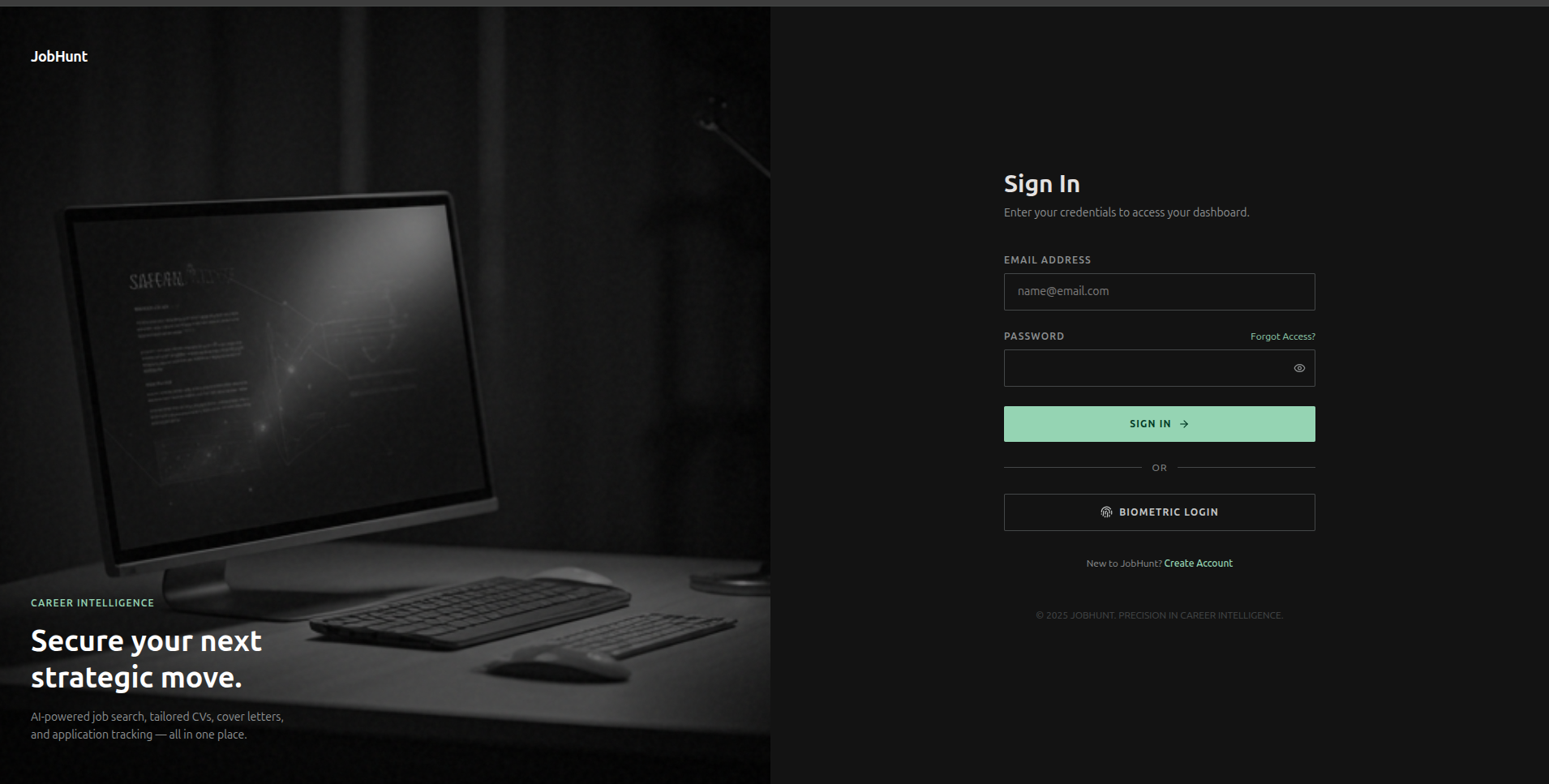
Most of the products I build start with a localized problem. It is usually a small, persistent frustration that I have either experienced myself or watched someone close to me struggle with.
My previous project, SalesCall, was born from a simple hardware constraint. I noticed an employee struggling to handle cold calls because existing apps were just too heavy for older devices. The product decision was simple: build something lightweight and hyper-focused on that specific workflow.
JobHunt followed that same path, but the problem was much larger. I am talking about the massive fragmentation of the modern job search.
The Problem: A Fractured Experience
I started noticing how disjointed the process has become. Most people are forced to jump between LinkedIn, Wellfound, and various Slack groups, only to manage the actual work in a messy mix of spreadsheets and bookmarked tabs.
Then there is the repetitive manual labor:
Rewriting CVs for every single application.
Trying to make cover letters sound human.
Manually tracking every stage of the pipeline.
Preparing for interviews without a clear framework.
I decided to treat this as a product challenge. I wanted to see if I could consolidate those scattered pieces into a single, intelligent workspace.
The Build: Architecture and Execution
I built JobHunt in my spare time as an AI-powered application platform. My goal was to prove that a high-utility tool could be built using a lean, performant stack. I used Next.js, Supabase, and Gemini AI, keeping it running almost entirely on free-tier infrastructure.
Right now, the platform includes:
Data Aggregation: A unified feed pulling from eight major job boards like Remotive, RemoteOK, and Adzuna.
Smart Personalization: Real-time CV tailoring and cover letter generation that actually sounds natural.
Direct Prep: Interview questions generated straight from the job description.
Workflow Management: A full pipeline tracker from the draft stage all the way to the offer.
Technical Basics: Biometric mobile support and Gmail OAuth to send applications directly from the platform.
Product Thinking vs. Engineering
The most rewarding part of this build was realizing that the hardest hurdles were product decisions, not just engineering ones.
As a Technical Product Manager, I had to solve for the "Zero State." I had to figure out exactly what a user should see the second they log in if their feed hasn't populated yet. I also had to handle technical edge cases, like extracting clean text from poorly encoded PDF resumes so the AI didn't produce "garbage" results. These small details are where the actual user experience is won or lost.
What is Next?
JobHunt is currently in beta and open for testing.
I am looking for genuine feedback from product thinkers, engineers, and anyone currently in the job market. If you are interested in the AI workflows, the architecture behind the platform, or just the philosophy of building in public, I would love to connect.
You can try the platform today and use the built-in feedback tab to tell me what you think. Let’s build a better way to work.